Pillow Guide · Fill, Feel & Care
Downright vs. Naturepedic: Comparing Loft, Fill, and Care
A down pillow can feel airy, yielding, structured, or somewhere between those poles. Downright and Naturepedic take different routes to comfort: one offers a choice of firmness and fill composition, while the other centers its down pillow on lofty white duck down and an organic cotton cover. Looking closely at construction, profile, and care makes the decision less about a label and more about what you want beneath your head each night.
Two approaches to a softer landing
Down is prized for its lightness and compressibility. Unlike a firm, uniform slab, down clusters shift and settle beneath the head, creating a soft, enveloping sensation. But “down pillow” is not a precise description of how a pillow will feel. Fill percentages, fill power, total fill weight, chamber design, shell fabric, and the pillow’s dimensions all affect the experience. Two pillows can share a down label yet have noticeably different loft and resistance.
The Downright Mackenza Feather and White Down Blend Sleeping Pillow makes firmness an explicit part of the choice. Its fill is listed as 75% feathers and 25% white goose down, with soft, medium, and firm options. The collection describes a 560 fill power blend and a 100% cotton cambric cover. Rather than asking one pillow to suit every preference, the range gives sleepers a way to choose a more yielding or more substantial feel within the same general design.
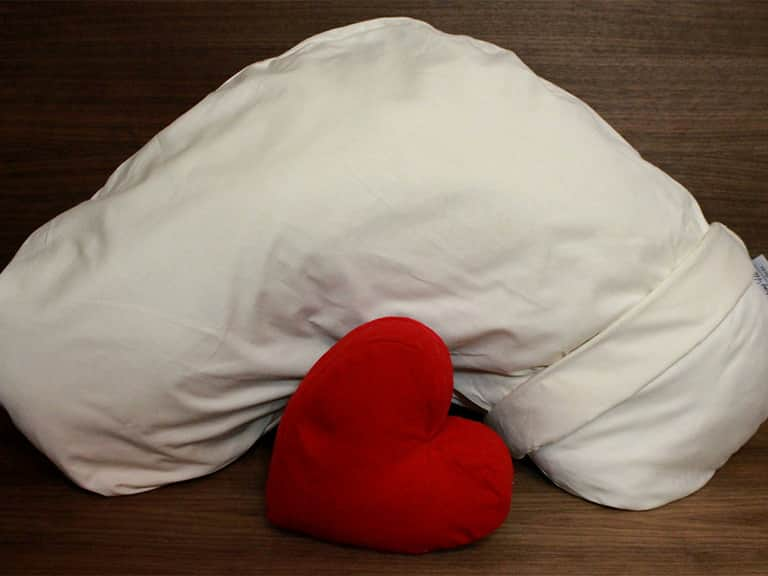
The Naturepedic Down Pillow takes a different emphasis. It is filled with 750-fill-power white duck down and covered in down-proof certified organic cotton. Its description highlights a lofty, plush feel and breathable construction. The listed sizes are queen and king, and the pillow is made in the USA with imported fabric. The distinction is not simply one brand against another: the two offerings foreground different qualities, one selectable firmness and a feather-down blend, the other high-fill-power duck down and a soft, airy profile.
Understanding fill: feathers, down, and the space between
Down and feathers come from the same broad source but are structurally different. Down consists of soft clusters rather than a central quill. Those clusters trap air, contributing to loft and a light, insulating feel. Feathers have a more defined structure and tend to add body and resilience. In a pillow, that structure can translate into a firmer, more responsive sensation, while down generally lends softness and airy loft.
The Mackenza blend uses both. Its feather majority contributes the more supportive character associated with feather fill, while the down portion brings softness and lift. That balance is useful for people who enjoy a classic feather pillow feel but want some cushioning in the mix. The manufacturer lists different fill weights by size and firmness, so the word “firm” is not an abstract promise: for example, the standard model is listed at 19 ounces for soft, 22 ounces for medium, and 26 ounces for firm. Queen and king sizes have their own corresponding fill weights.
Naturepedic’s down pillow is described as white duck down at 750 fill power. Fill power is a measure of the volume occupied by a given weight of down under a standardized test; it is not a direct firmness rating. Higher fill power can indicate greater lofting capacity for a given weight, but the pillow’s actual feel also depends on fill quantity, construction, dimensions, and how a sleeper’s head compresses it. It would be a mistake to treat 750 as a guarantee of a particular height or firmness.
That difference is central to the comparison. A mixed feather-and-down fill with named firmness choices gives shoppers a direct menu of feel. A lofty down fill may appeal to someone drawn to a softer, more compressible surface, but the product description does not list the same soft-medium-firm selector. Consider what you can reliably identify in the specifications: fill type, fill power where provided, available firmness, size, and care instructions. These details are more helpful than a simple ranking of which number is larger.
Loft and firmness: choosing the shape of comfort
Loft describes a pillow’s height or volume, while firmness describes how much resistance it offers when compressed. They are related, but not interchangeable. A pillow may look lofty before use and compress substantially beneath the head. Another may have a lower initial profile yet feel quite resilient. A person’s shoulder width, mattress firmness, and sleep position also influence how much elevation feels comfortable.
The Mackenza range offers a practical starting point for shoppers who already know whether they prefer soft, medium, or firm support. The soft version is likely to feel more yielding; the firm version has a higher listed fill weight and is intended to provide a fuller feel. That does not mean the firm option is automatically best for a side sleeper or that the soft option is inherently suited to stomach sleeping. Bodies and mattresses differ, and pillow comfort is personal. Use the firmness labels as a shortlist, then consider your usual sleeping posture and the way your neck and head feel when lying in your normal position.
Naturepedic’s 750-fill-power down offers a different point of reference: a down-forward, plush profile described as airy and supportive. Down clusters are designed to loft and compress, so the sensation may be appealing to someone who likes a pillow that can be gently shaped. Those who want a fixed, consistently high platform may prefer to investigate construction and dimensions closely before deciding whether this style will meet that preference. No fill-power figure alone can answer the question.
A simple way to think about the choice is to picture the pillow’s role. Should it provide a clearly selected level of resistance, with feather structure in the blend? The Mackenza’s firmness options make that distinction visible. Or should the priority be an especially down-rich, light, lofty feel, with an organic cotton casing? Naturepedic’s product description puts those qualities at the center. Neither approach is universally superior; each translates into a different set of priorities.
The cover matters more than it first appears
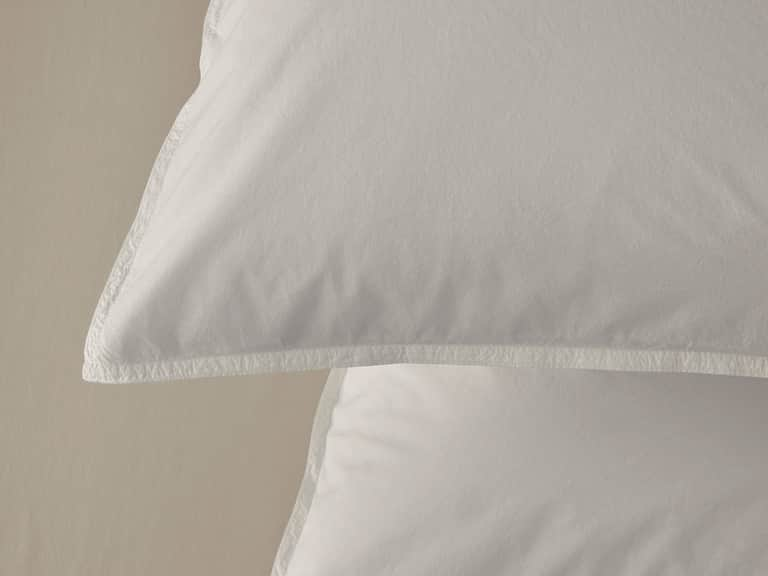
The shell is the layer between the fill and the sleeper, and it plays a quiet but important role in comfort. A tightly woven, down-proof shell helps keep fine fill from escaping through the fabric. Cotton is often selected for its familiar, breathable hand, though weave, finish, and construction influence how it feels against the skin.
Downright specifies a 233-thread-count, 100% cotton cambric cover for the Mackenza. Naturepedic describes its shell as down-proof, certified organic cotton. These are not identical claims: one names a cambric weave and thread count, while the other emphasizes organic certification and the shell’s down-proof construction. For shoppers who prioritize organic materials, the Naturepedic cover detail may carry particular weight. Those comparing the Mackenza should look at its cotton construction and any current certification details presented with the product.
A pillowcase and a washable pillow protector add another practical layer. A pillowcase is the familiar contact surface and can be changed and laundered regularly. A protector sits beneath it, helping shield the pillow itself from everyday moisture, oils, and dust. It can reduce how often the fill needs a full wash, which is especially useful for products that require long, careful drying. Protection is not a substitute for following the manufacturer’s care instructions, but it can make routine upkeep simpler.
Care comparison: a little patience goes a long way
Care is one of the most consequential differences between pillows. Down and feather fill can clump when wet, and a pillow that feels dry on the outside may still retain moisture deep inside. Thorough drying is essential: damp fill can lose its loft and develop an unpleasant odor. Before washing any pillow, read the current sewn-in care label and the manufacturer’s instructions. Product recommendations can vary by model, size, and available equipment.
For the Naturepedic Down Pillow, the listed guidance recommends professional laundering once or twice a year, specifying laundering rather than dry cleaning. If washing at home, the product information advises a warm, delicate machine cycle with mild detergent in a machine without a center agitator. It also recommends avoiding bleach and fabric softener, repeating the rinse cycle one or two additional times, and drying on low heat until the inner down is fully dry. The description notes that this may take three or four cycles. The advice to dry beyond the point at which the shell feels dry is especially important: the surface is not a reliable measure of the fill’s condition.
For the Mackenza blend, Downright recommends a washable pillow protector and gentle washing with mild soap. Its care guidance calls for thorough drying with tennis balls to help fluff and redistribute the fill. The separate Mackenza white-down pillow instructions offer additional detail for that different model, including a front-loading commercial washer, cold water, low-sudsing soap, and extended low-heat drying. Because the blend and pure-down versions are distinct products, use the specific care label and instructions that accompany the pillow you own rather than assuming every Mackenza variant has identical laundering directions.
These instructions reveal a meaningful ownership difference. If you want a pillow that can be refreshed at home, check whether your washer and dryer are suitable and whether you have enough time to complete a slow, thorough drying process. If not, professional laundering may be the more comfortable routine. The Naturepedic listing explicitly recommends professional laundering, while Downright’s blend description provides washing and drying guidance. In either case, care is not a minor footnote: it is part of the practical cost of choosing a natural fill.
Between deeper cleans, everyday habits help preserve the pillow. Use a clean pillowcase, add a protector, and fluff the pillow as appropriate to the fill. Airing it in a well-ventilated place can refresh the surface between washes, provided the care instructions permit it. Avoid storing a pillow while damp or compressing it for long periods unless the manufacturer says that is acceptable. A steady routine is more useful than frequent, unnecessary washing.
A considered choice for different preferences
The Downright Mackenza may be a natural fit for shoppers who want firmness to be a visible decision. Its soft, medium, and firm options, 75/25 feather-and-down blend, and multiple sizes make it a flexible choice within a traditional down-and-feather category. It is especially worth considering if you like some structure in your pillow and want to compare feel levels without changing to an entirely different fill family.
Naturepedic may appeal to shoppers who place a premium on a lofty white duck down fill and an organic cotton cover. Its 750 fill power and plush, breathable description point toward a softer, more down-centered experience. The listing includes queen and king sizes and gives detailed washing guidance, including the time needed for complete drying. That care commitment is part of the decision, not an afterthought.
For a person who is unsure, the best next step is not to infer a perfect match from marketing language. Compare the exact dimensions, firmness choices, return terms, and care label for the specific model. If possible, test how a pillow feels in your usual sleeping position, using a surface that resembles your own mattress. Notice whether your head sinks comfortably, whether the pillow shifts as you move, and whether you wake wanting more or less elevation. Those observations are more useful than chasing a universal “best down pillow.”
Also consider your sensitivity to materials. Down and feathers are animal-derived fills, while cotton covers may have different fiber and certification details. A down-proof shell can help contain fill, but it does not establish that a product will suit every person with allergies or sensitivities. If you have a known allergy or health concern, review the full materials information and seek appropriate professional advice rather than relying on broad claims such as “hypoallergenic.”
At a glance
| Consideration | Downright Mackenza blend | Naturepedic Down Pillow |
|---|---|---|
| Fill | 75% feathers and 25% white goose down | White duck down |
| Loft information | 560 fill power blend; fill weight varies by size and firmness | 750 fill power down; described as lofty and plush |
| Firmness options | Soft, medium, and firm | No equivalent firmness selector is specified in the listing |
| Cover | 233-thread-count, 100% cotton cambric | Down-proof certified organic cotton |
| Care emphasis | Gentle washing and thorough drying; a protector is recommended | Professional laundering recommended; home washing requires careful rinsing and extended low-heat drying |
Specifications and care directions can change. Confirm details on the current product listing and sewn-in label for the exact pillow.
Questions worth asking before choosing
Is a higher fill-power number always better?
No. Fill power describes down’s lofting capacity under a test, not a complete measure of comfort or support. Fill weight, chamber construction, pillow size, and personal preference matter too. A higher number may be relevant when comparing down, but it cannot replace an assessment of the whole pillow.
Does a feather blend automatically feel firm?
Not necessarily. The proportion of feather and down, amount of fill, shell, and construction all contribute. The Mackenza range makes the choice clearer by offering three stated firmness levels, but individuals can still experience those levels differently.
How often should a down pillow be washed?
Follow the manufacturer’s instructions for the particular model. Naturepedic recommends professional laundering once or twice a year for its down pillow. A protector and regular pillowcase changes can help keep the pillow cleaner between deeper cleans, potentially reducing the need to wash it more often than advised.
Can I put either pillow in a home washer?
Do not assume so. Naturepedic provides a home-washing method with specific machine, detergent, rinse, and drying guidance, while professional laundering is its recommendation. Downright’s blend guidance calls for gentle washing and complete drying. Check the label, machine type, and current instructions before laundering, and avoid a machine with a center agitator where the manufacturer advises against it.
The final distinction
Choosing between Downright and Naturepedic is ultimately a choice between two different ideas of comfort. Downright makes the familiar language of firmness explicit and combines feathers with down for a more structured, responsive feel. Naturepedic places the emphasis on lofty white duck down, a down-proof organic cotton cover, and a plush, airy impression. Both require thoughtful care, especially when it comes to drying.
Start with the sensation you actually want: a selectable level of resistance or a down-rich softness that compresses and lofts. Then weigh the practical details—cover, size, fill composition, washing routine, and how much care you are willing to give the pillow. When the decision is grounded in those specifics, “best” becomes less of a contest and more of a precise match for your bedroom, your habits, and the comfort you want to return to at night.