Sleep & Bedding
How Coyuchi Down Pillows Balance Loft, Support, and Everyday Care
A pillow is a small detail with a surprisingly large presence in the nightly ritual. With down, the question is not simply whether a pillow feels soft, but how its fill responds under the head, how its profile works with your sleep position, and what care will help it retain its character.
Published October 30, 2026
There is an art to the inviting pillow: a surface that looks plush, a shape that welcomes the head, and enough substance beneath the softness to feel considered rather than insubstantial. Down has long occupied this elegant territory. Its airy clusters create loft without the dense weight associated with some other fills, while the pillow’s construction determines how readily that loft yields and returns through the night.
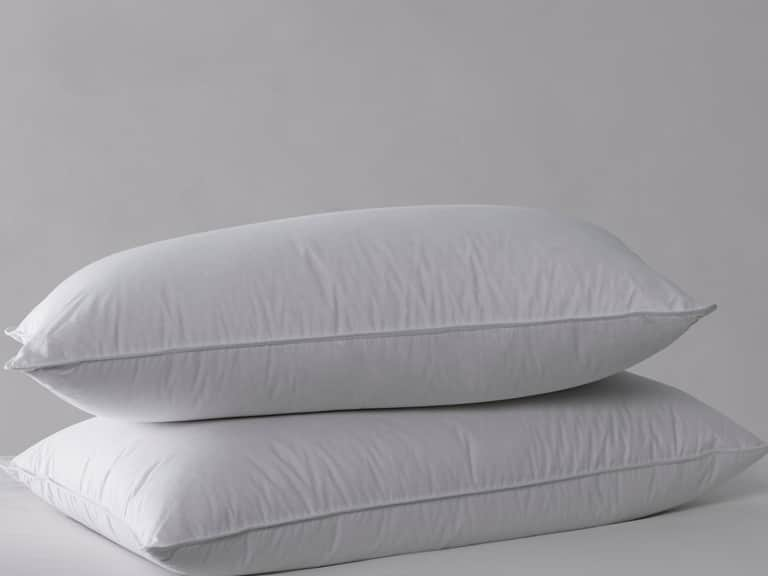
Coyuchi down and feather pillows illustrate why a label alone rarely tells the whole comfort story. A pillow with a feather-rich core and down on its outer faces will behave differently from one filled predominantly with down. Both may be described as soft, lofty, or supportive, yet their structure, compression, and feel can diverge. Reading beyond the headline adjectives is the first step toward choosing a pillow that fits your own sleep routine.
This guide looks at the details that matter: fill composition, loft, support, shell fabric, sleep position, and care. It is not a promise that one material will solve every sleep concern. It is a practical way to understand how a pillow is built and what those design choices may mean once the lights are out.
First, what do “down” and “feather” mean?
Down and feathers come from the same general source, but they are not interchangeable terms. Down consists of soft, three-dimensional clusters found beneath the outer feathers of waterfowl. Its fine fibers radiate from a central point, creating an airy structure that can hold pockets of air. In a pillow, this can produce lightness and a lofty, yielding feel.
Feathers have a more defined central quill and a flatter shape. They tend to bring more substance and structure to a fill, though their feel depends on the feather type, the amount used, and the pillow’s chamber design. In a blended pillow, feathers may contribute a supportive foundation, while down adds softness and loft around it.
These are broad tendencies, not guarantees. Fill quality, fill weight, chamber arrangement, fabric, and the dimensions of the pillow all contribute to the final experience. Two pillows with similar-sounding descriptions may feel distinct when pressed or slept on. For that reason, the most useful comparison is not “down versus feather” in isolation, but the full construction and how it matches your preferences.
When reviewing a pillow’s specifications, look for the stated fill composition rather than relying on the product name. A “down pillow” may contain a blend, while a down-and-feather pillow may place different materials in separate sections. The exact details can clarify whether the design is intended to feel particularly light, more structured, or somewhere between the two.
Loft: the profile you feel beneath your head
Loft refers to a pillow’s height or fullness. It is one of the most visible features on the bed, but what matters at night is the loft that remains after the pillow compresses beneath your head. A pillow may look generously full when freshly fluffed and settle into a lower working profile once in use.
Down’s airy clusters can create a cloudlike appearance, but the pillow is designed to respond to pressure. It compresses as the head rests on it, and the degree of compression depends on its fill and construction. A softer pillow may give more readily; a denser or more structured design may resist compression and hold more height. Neither quality is inherently better. The aim is a profile that feels comfortable and does not force the neck into an awkward angle.
Fill power is sometimes used to describe the lofting capacity of down. It measures how much space a given weight of down occupies under a standardized test. A higher fill-power figure generally signals that the down can create more volume for its weight, but it does not tell you everything about firmness, fill quantity, or the pillow’s eventual height beneath your head. A high number is not a substitute for considering the overall design.
Also pay attention to fill weight, dimensions, and construction notes when they are provided. A larger pillow may contain more material than a smaller one, while a gusset or internal chamber can influence how evenly it holds its shape. In other words, loft is not simply a matter of the plushness visible on arrival; it is the combined effect of materials, quantity, and design.
A simple at-home assessment can help you understand what you like. Place the pillow on your mattress, rest in your usual position, and notice whether your head feels level and comfortably supported. If the pillow collapses too far, or stays so high that your neck feels tilted, its working profile may not suit you. Comfort is personal, and this small test can be more informative than choosing by appearance alone.
Support is a matter of balance
Softness and support are often treated as opposites, though a pillow can be both yielding and supportive. The distinction lies in how it compresses and whether it continues to cradle the head without losing the profile you need. Down can feel supple and responsive; feather components or a more structured arrangement may lend additional body.
For a side sleeper, the space between the shoulder and the side of the head is an important consideration. A pillow that compresses too much may leave the head dropping toward the mattress; one that is too high may push it upward. Back sleepers often prefer a more moderate profile that supports the natural curve of the neck without lifting the head excessively. Stomach sleepers commonly seek a lower, softer pillow, or choose to use little or no pillow under the head. These are starting points, not rules: shoulder width, mattress feel, and personal comfort all matter.
Sleep position can also change during the night. A person who begins on their side may turn onto their back, and a pillow that responds to movement may feel different from one that holds a fixed shape. If you change positions frequently, consider whether you prefer a fill that can be reshaped with a quick fluff or one that maintains a more consistent profile.
There is no universal pillow height that guarantees proper alignment or prevents discomfort. Persistent neck or shoulder pain can have many causes, and a pillow is not a medical treatment. If pain is ongoing or severe, seek guidance from an appropriate health professional. For everyday selection, however, paying attention to how your head and neck rest on your mattress is a useful and practical place to begin.
Construction details that change the feel
Two pillows made with similar materials can feel different because of how those materials are arranged. Some designs use a single fill chamber. Others separate components into inner and outer sections, combining a more structured center with softer surfaces. A chambered construction can help shape the way the pillow supports the head, though the outcome depends on the specific materials and proportions.
For example, a feather-rich core with softer down around it may offer a more defined center and a cushioned surface. A pillow filled chiefly with down may feel lighter and more compressible. This does not make one design categorically superior. It simply provides a useful vocabulary for comparing options: ask where the support comes from, what creates the softness, and how the fill is likely to behave when compressed.
The shell deserves equal attention. A tightly woven fabric helps contain fine fill, while the hand and finish affect the way the pillow feels beneath a case. Cotton is commonly used for its familiar, breathable feel. Weave, weight, and finish can vary, so details such as cotton percale, sateen, thread count, or a down-proof shell may help explain the surface quality and intended containment.
A pillow protector adds another layer between the pillow and daily wear. It can help limit contact with skin oils, perspiration, and dust, while leaving the decorative pillowcase free to be changed and laundered more frequently. Choose a protector that fits without pulling the pillow into an overly tight shape; an ill-fitting layer can change the feel as well as the appearance.
Care that preserves the pillow’s character
Good pillow care is less about frequent intensive washing than about routine protection and mindful handling. A washable pillowcase and protector are the first line of defense. Changing and laundering those layers regularly helps keep everyday soil away from the fill, and it can reduce the need to wash the pillow itself.
Fluffing is a simple daily habit for down and feather pillows. Give the pillow a few gentle shakes or press and release the sides to redistribute the fill and restore some of its airiness. Avoid beating it aggressively; the aim is to loosen and spread the fill, not to force it into a new shape. If one area repeatedly flattens, check whether the pillow can be rotated or turned according to its design.
Washing instructions are product-specific. Some down pillows can be machine washed, while others call for professional laundering or more particular handling. Before washing, read the care label and check whether the pillow fits comfortably in the machine. A crowded drum can prevent water and detergent from moving through the fill and may leave soap behind. Avoid bleach and fabric softener unless the manufacturer explicitly permits them.
Drying requires special attention. Moisture can remain inside the fill after the outer shell feels dry, so do not assume the pillow is ready based on the surface alone. Use only the drying method and heat level allowed by the care instructions, and allow sufficient time for the entire pillow to dry. If the label recommends low heat or a particular technique to help redistribute fill, follow that guidance. A damp pillow should not be put back into regular use.
For a down pillow, thorough drying helps preserve a fresh, even feel and reduces the risk of clumping. If you are uncertain about washing at home, professional laundering may be the more suitable option. Care labels take precedence over general advice: shell fabric, fill blend, stitching, and chamber construction can all affect what a pillow can safely tolerate.
Between washes, airing the pillow in a dry, well-ventilated room can help refresh it. Avoid prolonged exposure to harsh direct heat or damp conditions. Use a clean pillowcase, keep the protector in good condition, and let the pillow rest uncovered briefly when changing the bed. These modest practices can make routine upkeep easier and gentler on the fill.
A thoughtful comparison checklist
When comparing Coyuchi down pillows or any down-and-feather design, read the specifications with your own sleep habits in mind. A product description should be a starting point for questions, not a substitute for them.
- Fill composition: Is the pillow filled with down, feathers, or a blend? Are different materials placed in separate chambers?
- Loft and firmness: Does the listed profile or feel match the height and resistance you prefer once the pillow compresses?
- Fill power and weight: Are these figures provided, and are they being considered alongside the pillow’s size and construction rather than as standalone measures?
- Shell fabric: What is the outer material, and is the shell designed to contain fine down?
- Sleep position: Does the pillow’s working profile seem compatible with how you usually sleep and the width of your shoulders?
- Care instructions: Can the pillow be washed at home, and what drying method does the label require?
- Protection: Is there a suitable pillow protector that can help keep the fill clean between washes?
- Sourcing information: If animal welfare or material sourcing is important to you, look for clear, specific documentation and certifications rather than relying on broad language alone.
This checklist keeps the decision grounded in comfort and practical use. It also helps distinguish a pillow that looks appealing in a neatly made bed from one that will feel right through a full night’s rest.
A considered bedtime, not a perfect formula
The appeal of down is its particular balance of lightness, loft, and softness. The way those qualities translate into support depends on the fill blend, its arrangement, the pillow’s profile, and how much it compresses beneath you. A feather component may add structure; a down-rich fill may feel airier and more yielding. The label matters, but the construction tells the fuller story.
Everyday care belongs in the decision, too. A protector, regular fluffing, and careful attention to washing and drying instructions help keep a pillow pleasant to use. These are small gestures, but they turn bedding from a purchase into part of a steady, personal routine.
Ultimately, the best pillow is not the one with the most dramatic loft or the most luxurious-sounding description. It is the one that feels comfortable in your usual sleep position, suits your preferred level of softness and support, and can be maintained in a way that fits your life. Begin with the details, listen to how your body responds, and let the nightly ritual—not the adjective on the tag—be the final measure.
Frequently asked questions
Does a higher fill power automatically mean a firmer pillow?
No. Fill power describes the lofting capacity of down relative to its weight; it does not, by itself, determine firmness or the amount of support a pillow provides. Fill weight, construction, and compression all contribute to the feel.
Are down pillows always softer than feather pillows?
Down often feels airy and yielding, while feathers can contribute more structure. But blends, fill quantity, and chamber design can change the result, so the material name alone is not a reliable predictor of the finished feel.
How often should a down pillow be washed?
Follow the care label for the specific pillow. Using a washable protector and laundering the pillowcase regularly can reduce how often the pillow itself needs cleaning. When washing is required, make sure the fill is dried thoroughly according to the manufacturer’s instructions.
Can one pillow suit every sleep position?
Some people find a versatile, compressible pillow comfortable as they change positions, while others prefer a specific height or firmness. Side, back, and stomach sleepers often have different profile needs, but individual comfort and body shape remain central to the choice.